26 June, 2015
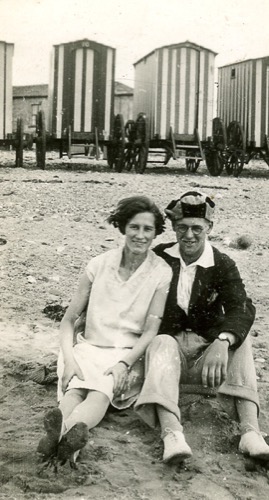
· PhotographyRunning parallel with my interest in photography has been my interest in the photograph as a historical record. Although this subject is huge and one I would like to return to, it can hold a particular interest when photographs provide insights into the lives of those who hitherto you had known only in one context. For example the relationship of a Grandson to his Grandfather. My own Grandfather, who was 105 when he died, was a case in point. I had only known him as an old man, and this early photograph (taken at Cleveleys in 1927) both delighted and enabled me to see him in a way I hadn't previously.
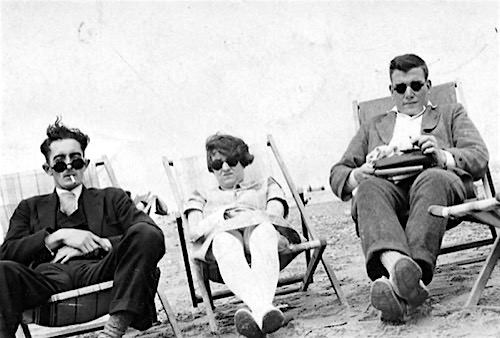
Cleveleys, around 1927, photographer unknown.
One of my most exciting discoveries in this respect was finding, after his death, a collection of 6cm by 9cm negatives that had belonged to my Granddad, most probably taken with the famous ‘Box Brownie’ manufactured by Eastman Kodak (for an interesting BBC article on the Box Brownie please see ‘The most important cardboard box ever?'). Although not important in a wider historical context, I remember that for me, upon discovery (and, more excitingly, when scanning and then converting them into digital images that I could view readily), the feeling was akin to that of an archaeologist finding a hidden treasure, and I supposed I felt the archaeologist's sense of pride. Here were previously unseen and surprisingly casual photographs of life in the north of England, less than a decade before the outbreak of World War Two.
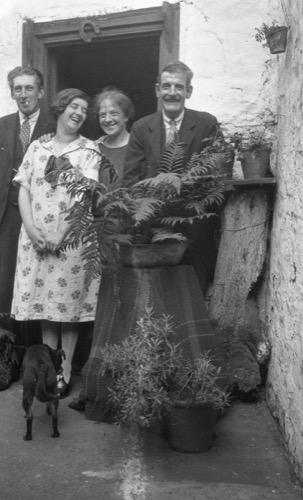
Grandma Naylor (laughing in dress) with friends.
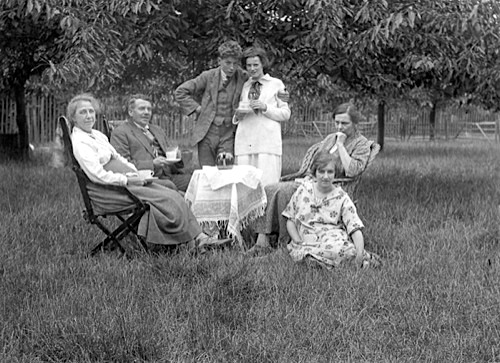
Afternoon Tea
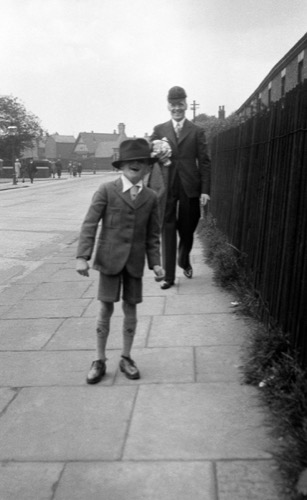
Great Uncle Leonard and Uncle Ronnie swapping hats, 1930s (approx.)
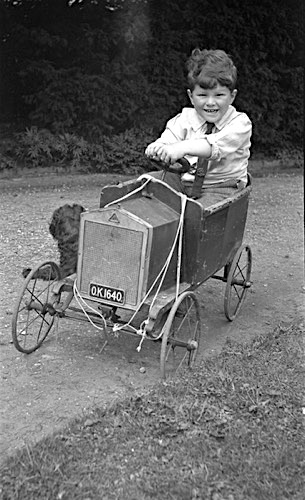
Boy in Toy Car.
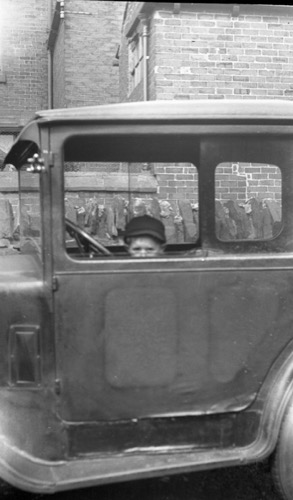
Boy in car.
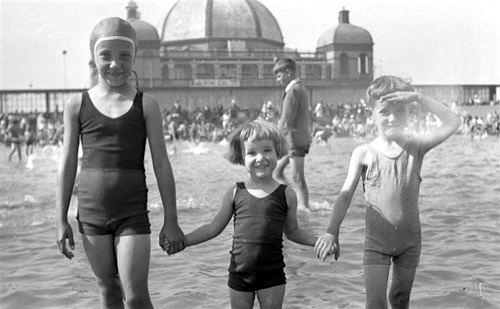
Mum and Uncle Ronnie at the seaside a couple of years before the Second World War.
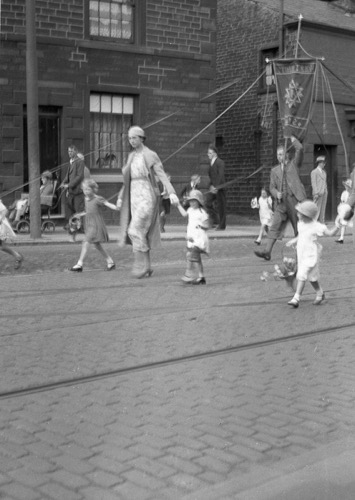
Church parade.
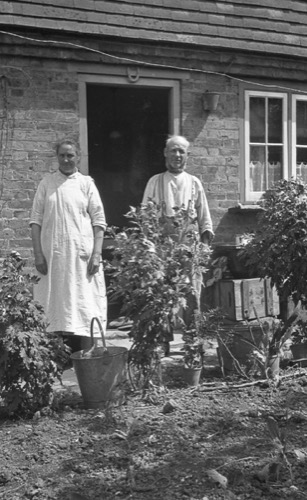
Couple outside a cottage. Although taken in the 1930s it looks like it might have been taken earlier.
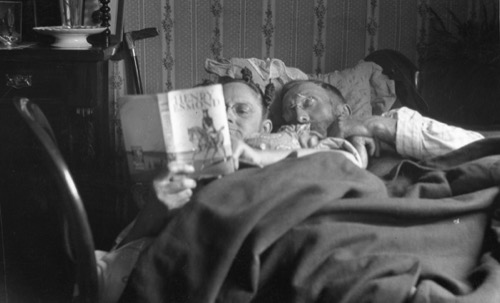
Reading in bed.
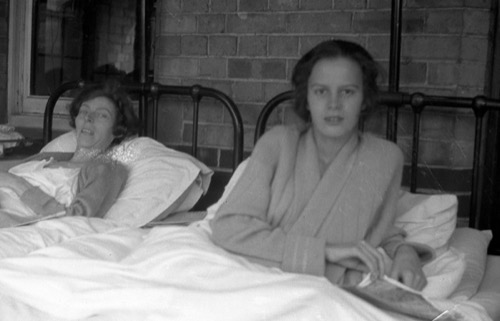
Patients suffering from Tuberculosis were often placed outside.
Mr and Mrs Briscoe
Interesting as the above is, photographs also help tell important stories from our past, stories worthy of the memory. The following is one such story, of a loving couple (one of millions), whose life together was disrupted tragically by war.
Walter Briscoe was born near Oldham (in the industrial north of England) in 1910 and from 15 years of age worked with the Oldham Co-operative Society. His future wife, Alice (my Great Aunt) was born in the same area some three years earlier, and from a young age worked in the Lancashire cotton mills.
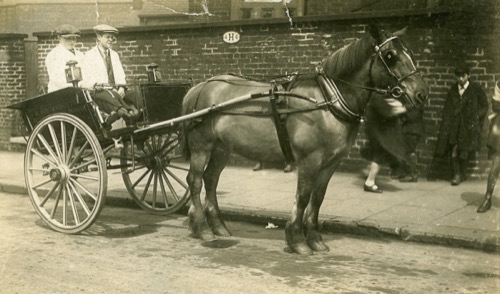
Walter Briscoe when employed by W. Winterbottoms in Oldham, Lancashire.
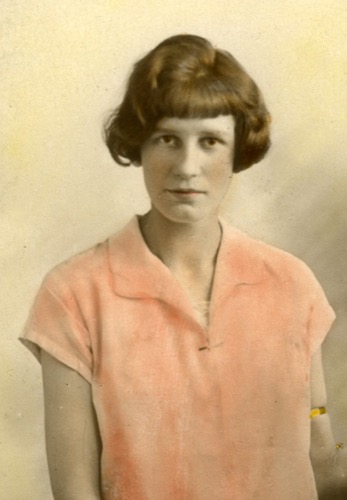
Alice Briscoe as a young woman.
They met (I'm not sure where or how), fell in love, and married in 1933. The photographs below show the joy of early holidays at the English seaside.
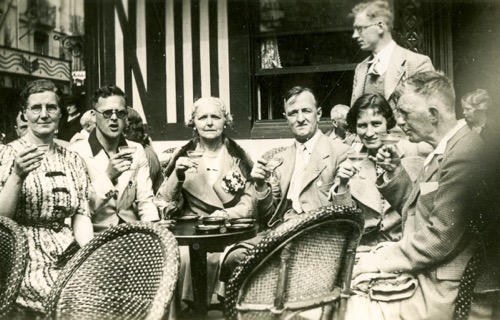
Having a drink.
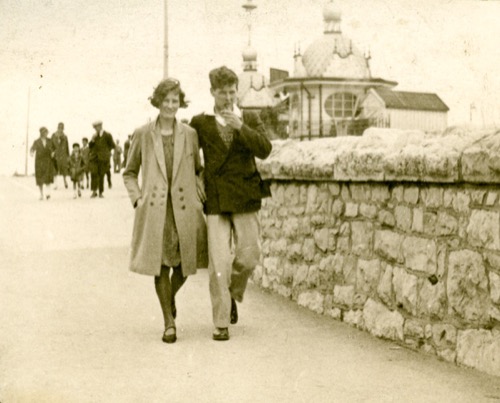
Having a stroll along the front.
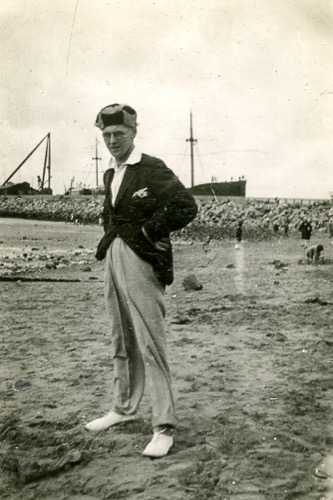
The latest fashion!
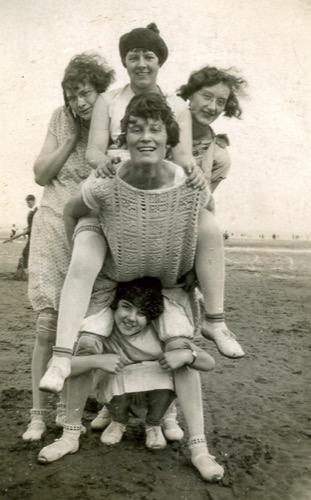
Good friends.
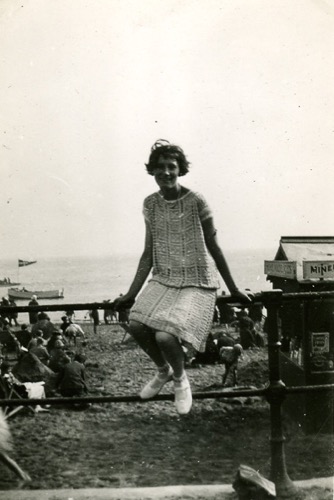
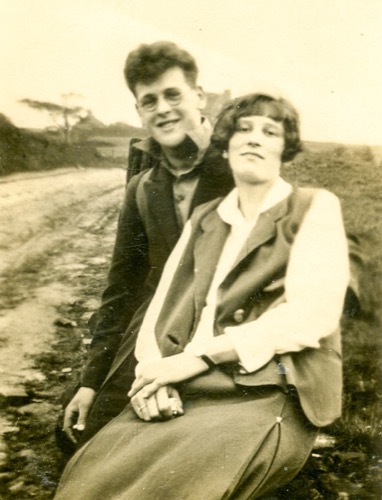
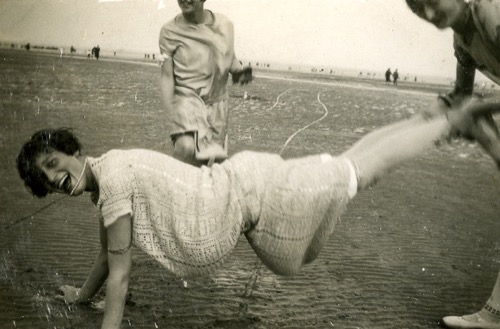
When the picture below was taken Hitler had already been exercising his malign power as Chancellor of Germany for four years, and less than two years later his attack on Poland was to lead Great Britain into it's second devastating war of the twentieth century. Inevitably Walter and Alice's future could not escape the global conflict that was to follow.
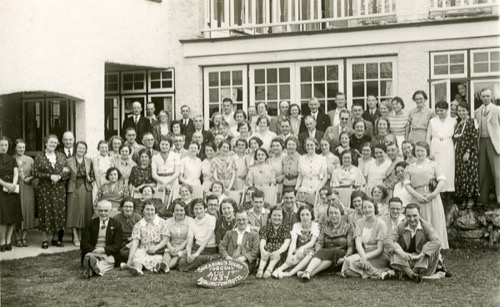
Walter and Alice on a Shearings Holiday to Torquay in 1937.
Walter was enlisted in 1940 and was employed from 1941 (as a Lance-Corporal in the Royal Engineers) in the terrifying job of bomb disposal and mine clearance. The following photographs provide a valuable record of this line of work during the war.
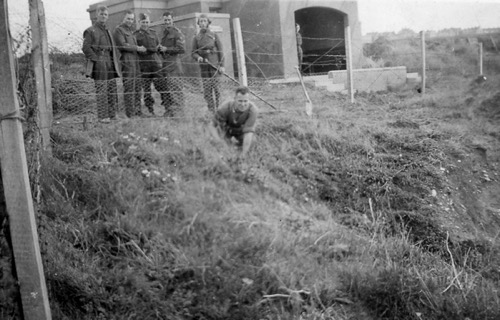
Carefully approaching an unexploded bomb.
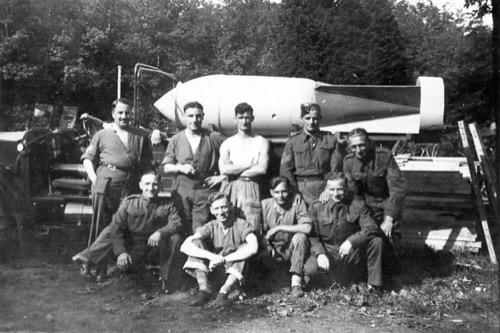
Walter with his bomb disposal team.
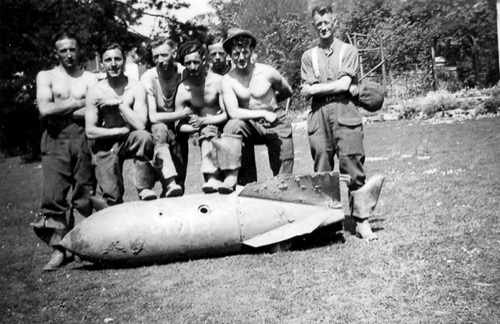
Celebrating safely defusing a bomb.
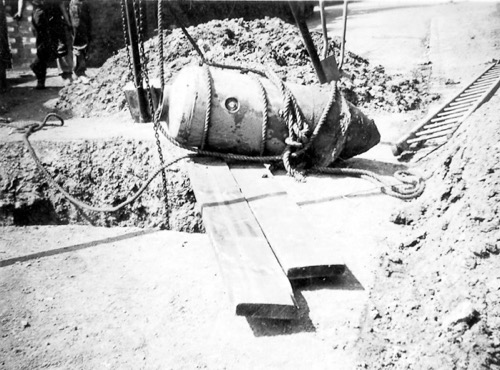
Raising the bomb from the ground.
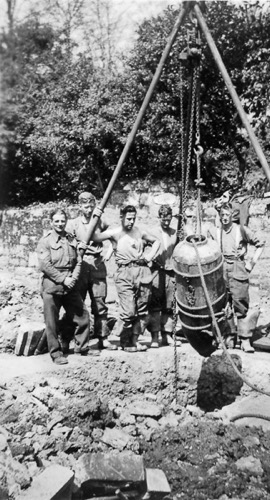
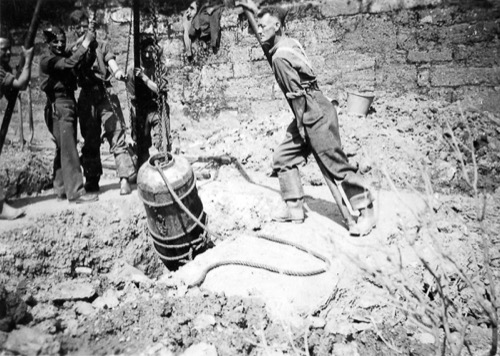
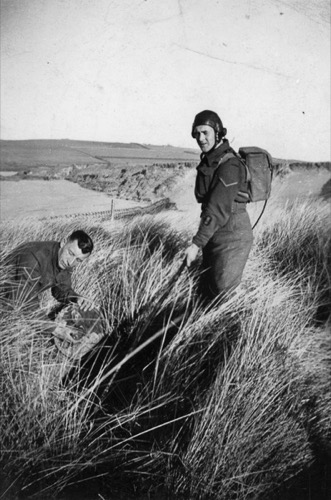
Using a metal detector to find land mines.
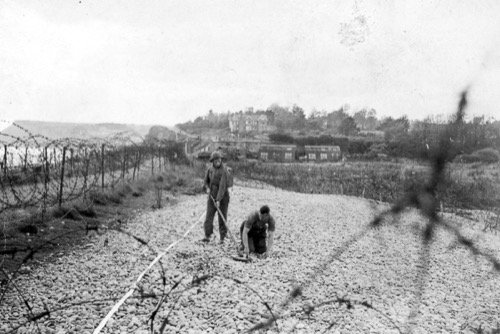
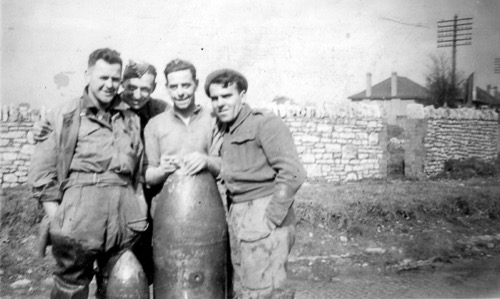
Another job done.
In June 1944 Walter worked on a very difficult and dangerous minefield at Holywell Bay in Cornwall, and as ‘chief detector man’ in Portland and Wyke Regis from August to December 1944. During this period he detected over 400 mines and lifted and defused about 150, and often had charge of the clearing party. His bravery was recognised by his commanding officer who sent forward a citation in November of 1944 on which the award of British Empire Medal was made. Sadly, Walter did not live to receive the medal in person, as he was killed by an explosion in the course of his duty on 8th December. His wife collected his award from the King on his behalf.
My aunt never remarried - she said she could never find anyone as good as her late husband.
Please email me should you have a comment or query relating to this post.
← Rather splendid, a review of the Panasonic FZ1000 camera | Post Archive | Brimham Rocks →